By John Dobberstein, Editor
Beale Infrastructure, the firm proposing a 400-megawatt data center in Coweta, has now asked the city twice to delay public hearings on the project.
Coweta’s Planning Commission was to hear a re-zoning request for the project next month, but the city was asked to move that back to Jan. 19. The public hearing before the City Council would be Feb. 2.
A spokesperson for Beale told the Sentinel earlier this month the company was still committed to the project, but additional time was requested to incorporate community feedback and other input into the project.
Meanwhile, both the city of Coweta and Beale have unveiled web pages to answer questions about the data being proposed. In recently released information, Beale and the city revealed the following:
- The Coweta center is proposed to be a cloud server, not an AI server, and the user is a “one of the major U.S. tech giants.” Beale Infrastructure is an arm of Blue Owl, which recently sealed a $30 billion private capital financing deal for Meta’s advanced AI data infrastructure project in Louisiana.
- The developer says that once fully operational, electric utility franchise fee revenue with the Coweta facility “will be significant,” estimated between $1 million and $3 million annually. The city says the revenue will likely be dedicated to street improvements, public parks, facilities, amenities, operations and future economic development. The revenue would represent a 10% to 30% increase in general fund revenues.
- The city says Beale has offered to fund a water master plan study to provide a list of projects needed to support the city’s long-term growth plan. This study would also be used to identify priority projects that Coweta is unable to fund.
- The city says that includes completion of a water loop on the west side of Coweta for “improved water quality and resilience, a water plant SCADA system upgrade needed to improve resilience and continual monitoring of water quality; and elevated storage to improve water pressure in areas currently reliant on pumps.
- The city adds the data center is expected to provide “substantial, ongoing support” to Coweta Public Schools and other local taxing jurisdictions through a 25‑year Payment in Lieu of Taxes (PILOT).
- Total annual PILOT payments at full build-out are estimated to be about $5 million for all taxing entities, with roughly $3 million annually projected for CPS. The city says the PILOT funds will not reduce state school aid.
- One‑time fees tied to construction, inspections, and infrastructure connections will be significant, city officials say. Coweta would also see an increase in local spending by contractors and visiting workers on lodging, food, fuel, and supplies, which would sales tax receipts during the build phase.
- Data centers often require utility and infrastructure upgrades such as water lines, electric service, sewer, fiber and substations, and the city says the developer will fund any needed improvements, “so the community gains modernized, more reliable systems without a direct cost to residents.”
- A new substation on the data center site will, according to the city, would “strengthen local power reliability, support economic growth, and deliver modern grid improvements paid for by the developer —not by local ratepayers.”
- The substation would also reduce the risk of overloads and enables dependable 24/7 operation for the data center and other businesses.
- Modern substation equipment and added redundancy shorten outage duration and improve the grid’s ability to isolate and restore faults, improving reliability for residents and businesses.
- The substation will be developer-funded and grid upgrades will be installed “without capital outlay from the city, protecting ratepayers from upfront project costs,” the city says.
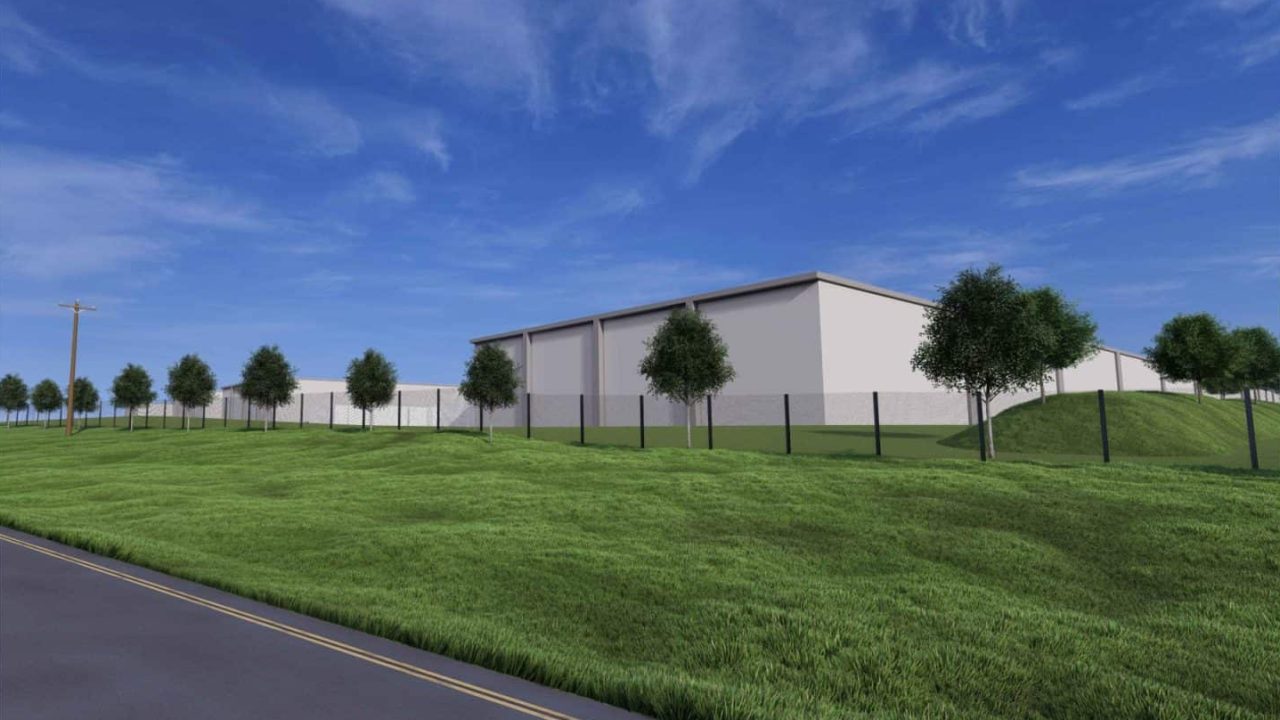
- Although some data centers use evaporative or chiller systems that can consume large volumes of water, Beale officials have stated that Project Atlas will use a closed-loop water-recycling system.
- Once the system is filled during construction it will continually circulate water between the servers and chillers to dissipate heat without requiring a fresh water supply.
- Beale says the data center will consume no more than 50,000 gallons per day, and typically 15,000-20,000 per day, “the equivalent of 2 to 3 restaurants.” Wagoner County Rural Water District 5 will be the water provider.
- Coweta’s Community Development department has established a 65 decibel (dB) noise limit with substantial fines for violations. Beale’s design target is 55 dB. Backup generators will be for emergency use only and are limited to 100 hours of testing per year by federal law.
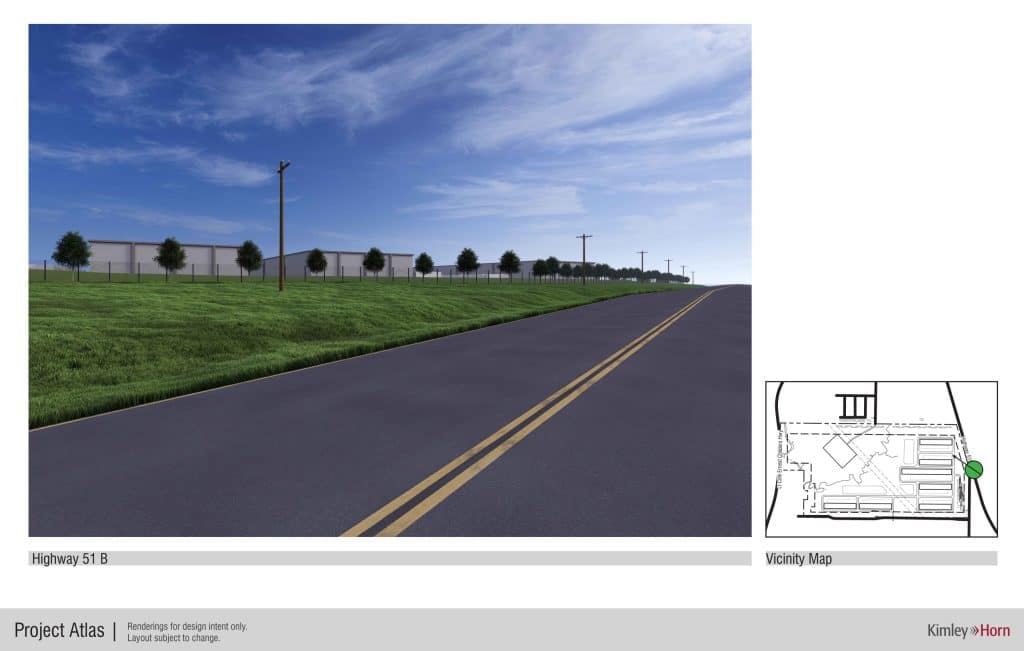
- The generators will have sound enclosures and mufflers. The city says exterior lighting will be hooded and controlled to minimize light spill into nearby homes. A 300-foot setback zone will be landscaped to screen residents from light and sound.


City officials confirmed that discussions about the data center began when a real estate firm approached city staff in 2024 about the possible sale of city-owned land adjacent to the wastewater treatment plant.
The city was asked to sign anon‑disclosure agreement, “to protect sensitive commercial details and to allow staff to fully evaluate the developer’s technical and operational needs before releasing information to the public,” city officials say.
“Over several months, staff and Beale exchanged detailed information about the city’s system capacities and the project’s potential demands. Reviewing utility and infrastructure requirements with developers is standard practice before any project is brought forward for formal consideration.”



Leave a Reply