Source: City of Broken Arrow
Is it Lynn Lane? Or 9th Street? Or S. 177th E. Avenue?
Broken Arrow residents and people new to the area often ask why Broken Arrow has more than one name for city streets.
Our naming system dates back to at least 1948 but it became official in 1973 when it was decided to retain and formally adopt Broken Arrow’s naming streets system to foster pride in Broken Arrow and maintain its identity from Tulsa.
When Broken Arrow was originally platted around the turn of the 20th century, all of the east/west streets, starting from the north to the south were alphabetical, A, B, C, etc. , through J. Avenue.
All north/south streets, starting from the east, were numbered 1st through 7th Streets. Two exceptions were made at this time: E Avenue became Broadway Street and 2nd Street became Main Street, both of which retain those names today.
The original plat of Broken Arrow ran from what is now Greeley to Houston and from Elm Place to 2nd Street. College (formerly Avenue D) and Commercial (formerly Avenue F) were named sometime prior to a 1910 platting of the College Addition, between the original townsite and the Haskell State Agricultural School which was located west of College Street and near Lynn Lane.
The current naming structure begins to appear in records when the Kenwood Addition, platting on the north side of Kenosha was filed in 1948. In this plat, streets west of Main Street were named for the current system, (for example, 3rd Street became Ash Avenue).
However, streets east of Main Street maintained their number characteristics. Documents filed in 1952 for the Brown’s Addition, which is between Kenosha Street and Elm Place, shows that a standard naming system seems to have been adopted and the names used are the same ones used today.
The distance between the City of Tulsa and Broken Arrow in these days meant conflicts with street names were not an issue.
However, Tulsa County officially began its street numbering system in the early 1950s, and as areas were developed outside of Broken Arrow City limits, confusion and conflicting names began to arise.
By the late 1960s, these conflicts led the City Council and Planning Commission to begin studying the issue. In 1973, it was decided to retain and formally adopt Broken Arrow’s established system of naming streets.
The City of Broken Arrow uses its own street names and numbering system. While most major arterial roads match those in the City of Tulsa, the names and addresses change to the Broken Arrow system inside City Limits. For example, 71st Street becomes Kenosha Street and 145th E. Ave. becomes Aspen Avenue.
For updates, subscribe to our free newsletter!
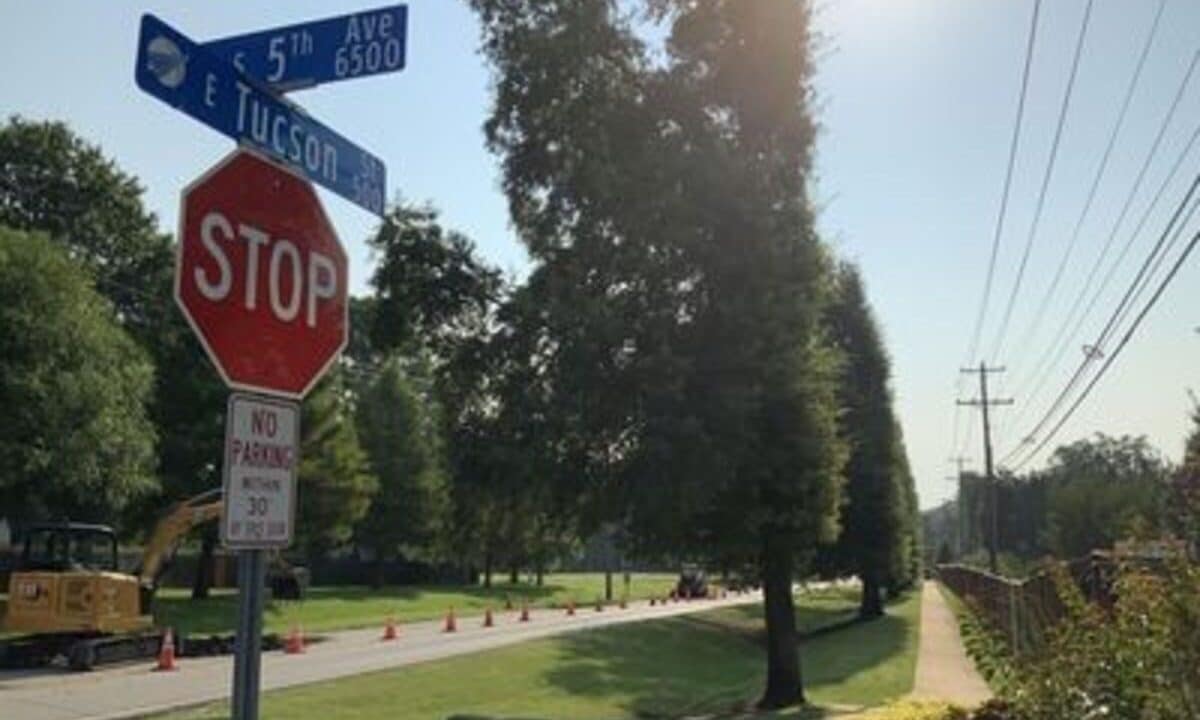
For the convenience of drivers, signs for major section line roads contain both the Broken Arrow names, along with the Tulsa County designations.
Generally, north-south roads carry horticultural names west of Main Street and are numbered east of Main Street. East-West roads carry names of cities: northern cities north of Broadway, southern cities south of Broadway


Leave a Reply