
By John Dobberstein, Editor
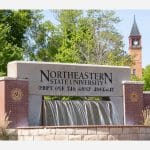
When city leaders sought to remove legal roadblocks to Northeastern State University having freshman on its Broken Arrow campus, they saw it as a fulfillment of a vision voters approved of decades ago.
It appeared NSU-BA, through Senate Bill 701, had an inside shot at becoming the Tulsa metro’s first 4-year public university.
But state lawmakers appear ready to embark on a more expansive “free market” approach to higher education needs that would benefit expansion goals for multiple colleges and universities.
An amendment to Senate Bill 701 and House Bill 2854 would end a host of restrictions in place among higher ed institutions such as Oklahoma State University, Langston University, Tulsa Community College, NSU-BA and NSU-Muskogee, and return control of programming decisions to the Oklahoma State Regents for Higher Education.
An amendment in SB701 declared a moratorium on the following higher education course and program restrictions:
- Oklahoma State University-Tulsa’s restriction to upper division undergraduate courses and degree programs;
- Oklahoma State University’s prohibition from duplicating undergraduate courses offered by Tulsa Community College;
- Oklahoma State University’s prohibition from duplicating undergraduate degree programs offered by Langston University in Tulsa;
- Langston University in Tulsa’s restriction to upper division undergraduate and graduate courses;
- Northeastern State University in Broken Arrow’s restriction to upper division undergraduate and graduate courses;
- Oklahoma State University-Tulsa’s prohibition from duplicating undergraduate degree programs offered by NSU-BA;
- Northern Oklahoma College’s exclusive authority to offer all lower division courses and programs at the University Center at Ponca City;
- Connors State College’s restriction to lower division classes and programs;
- Northeastern State University-Muskogee’s restriction to upper division classes and programs and graduate classes at masters level; and,
- Any restrictions imposed by law preventing two-year community colleges and junior colleges from offering upper division undergraduate courses and undergraduate degree programs.
The amendment says the State Regents for Higher Education can approve “functional exceptions,” such as an expansion or exception to assigned institutional function or mission to permit an institution of higher education within the State System of Higher Education “to offer courses or degree programs outside the institution’s assigned function or mission to meet unmet workforce needs.”
The changes would allow a host of schools to begin offering lower-level instruction in the 2026-27 school year.
It could be said that the Tulsa itself has dominated the higher-ed market, as the city already has two 4-year private universities and the OU and OSU campuses.
Population is steadily growing Broken Arrow, Bixby, Jenks, Coweta and Wagoner County as a whole, but those suburbs have no local access to a 4-year university. Broken Arrow High School graduates must take lower-level classes at Tulsa Community College, NSU’s Tahlequah campus or elsewhere and then transfer to NSU-BA if they want to finish their degree locally.
Broken Arrow Chamber of Commerce CEO James Bell implored members Friday to contact state lawmakers and voice support for the legislation ahead of a potential vote next week.
He noted the Tulsa region is 23,000 bachelor’s degrees behind similarly sized metro areas, and that Broken Arrow and Tulsa County have invested millions into the NSU-BA campus with the expectation of it becoming a comprehensive public university.
“These bills restore authority to the Oklahoma State Regents for Higher Education to expand degree offerings — like the full four-year programs our community has long supported at NSU-Broken Arrow,” Bell wrote.
“This legislation restores the Regents authority to act based on community and workforce needs.”
Gov. Kevin Stitt hinted at the potential changes during a recent visit to Broken Arrow, where he was asked if he supported NSU’s desire for a 4-year university here. Stitt said he wouldn’t be supportive of higher-ed monopolies but agreed with measures that would provide more choices for students.
Stitt told business leaders the “free-market system” of higher education in Oklahoma has become distorted by politics and lobbyists, resulting in legislative edicts that certain universities cannot offer certain classes or degrees.
“I’m not opposed to the four-year (university) and I’m certainly not opposed to Langston teaching something or TCC teaching something. If I want to take an accounting class at your college, I should be able to do that,” Stitt said. “But there’s all these rules about how you can only do this here, you can only do that here.
“That makes no sense. So we’d love to get the four-year university here, but I want to break through some of that silo and not give you a monopoly. I want you to be able to compete against OSU or TCC or Langston or whoever else decides to be here.
“But we believe in that free-market system, so you have a four-year university. I think it’s great.”


Leave a Reply