By John Dobberstein, Editor
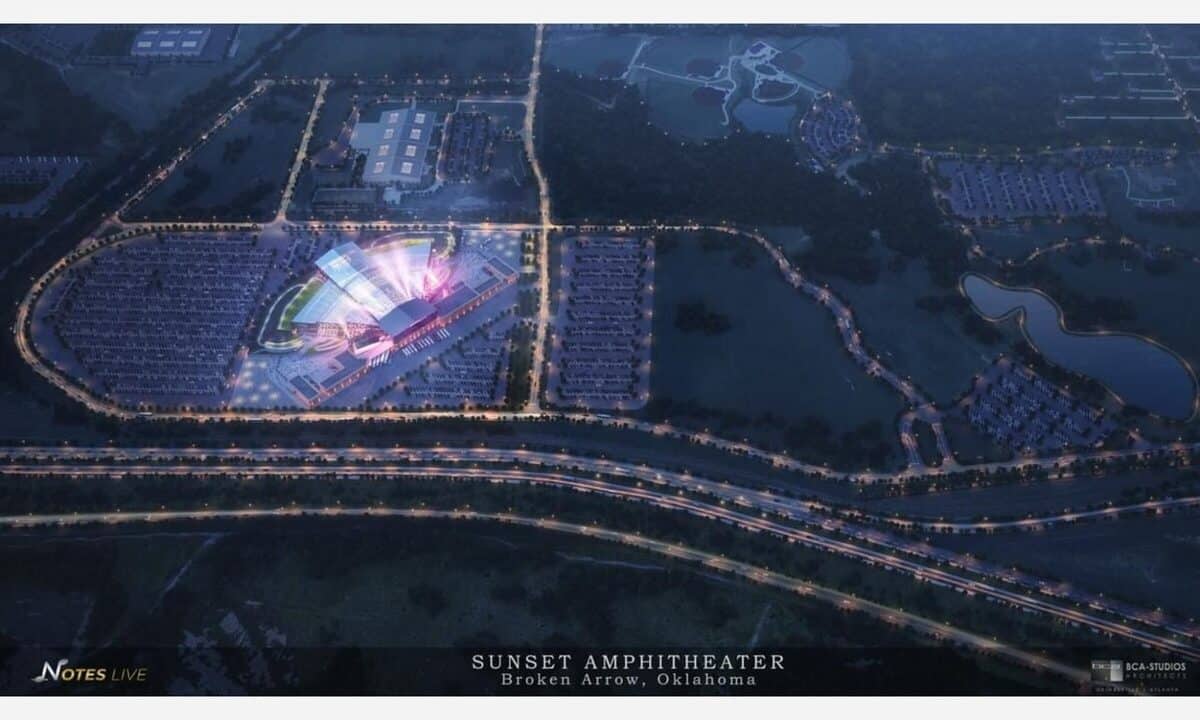
After a second public hearing without any dissent being voiced, the Broken Arrow City Council approved the creation of a tax increment financing district related to the $71.5 million Sunset Amphitheater project in Broken Arrow.
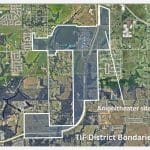
The city will use the TIF district to capture new sales tax revenue in a specific area to pay for more than $28 million in infrastructure improvements needed to accommodate the development, which will be located just north of the Broken Arrow Events Park.
The vote comes after a public forum about the amphitheater project was held last week at Northeastern State University’s Broken Arrow campus.
More than 100 people attended to ask questions about the development by Colorado Springs-based entertainment company Notes Live.
Most the questions surrounded how the city planned to handle traffic and noise issues with the project.
Notes Live has submitted planning documents to the city and will be presenting the plans at the Broken Arrow Planning Commission meeting Feb. 6.
TIF could bring significant revenue
TIF districts are ultimately created after a plan is reviewed by a TIF review committee and the Planning Commission.
The committee reviewed the project plan to make findings of eligibility and financial impacts and recommended approval of the TIF plan, as did the Planning Commission.
This specific TIF district does not capture any ad valorem taxes, so local schools and colleges should not be impacted. The only taxing entities affected are the city of Broken Arrow and Wagoner County, which is a sales tax entity participating in the district.
The Wagoner County Board of Commissioners recently decided to support the project and the TIF district.
“This strategic decision aligns with the county’s vision for a prosperous and vibrant future,” said Wagoner County Economic Director Darla Heller, who served as a vice president at the Broken Arrow Chamber before accepting her new position a couple of years ago.
“By earmarking a designated area as a TIF district, Broken Arrow and Wagoner County “aim to attract new businesses, enhance public infrastructure, and create a more attractive environment for residents and visitors alike,” Heller added. “Wagoner County recognizes the importance of collaboration between the public and private sectors.”
The TIF will capture 100% of the new sales tax generated from amphitheater, including ticket sales, concessions and merchandise. The district would capture 50% of the city sales tax from any additional development, and the other 50% would go to the city.
The special district will also capture 100% of any new hotel tax revenue and 100% Wagoner County sales tax revenue for the first 4 years. From there it would be 75% for the next 2 years, 50% for the following 2 years and 25% for the last 2 years – and the district wouldn’t capture any Wagoner County tax revenue after 2033.
In the economic development agreement the city approved with Notes Live, Ellis noted the entertainment company agreed to assess a 1% surcharge on all ticket sales and concessions and merchandising, “that is also a part of this revenue stream that would be utilized to pay for the project costs.”
Because the amphitheater is expected to be a destination experience that draws visitors from out of state, additional development along the major arterial roads and interchanges with Creek Turnpike is possible.
“We we’ve projected a very modest amount of development, but it could be really significant,” Ellis said.
Economic impact estimated at $211M
At this point, the Sunet Amphitheater is projected to create $85.5 million in annual retail sales, 459 construction jobs, 393 indirect jobs and 240 permanent jobs and a $211 million in annual economic impact.
About $258 million in total sales tax revenue will be raised from the project over the TIF’s 25-year lifespan, and $125 million in total TIFF revenue.
Some $124 million in taxes would be allocated to the state, $97 million allocated for project costs and $7 million allocated to the city. The city of Broken Arrow hotel tax could generate about $4.3 million, and the 1% purchase fee agreement alone could generate about $23.6 million over the TIF period. Reimbursement through the state’s Leverage Act could bring in another $124 million, Ellis said.
Ellis also estimated about $23 million would be generated in ad valorem property tax revenue, although none of that is being collected by the TIF. About $15 million of that would go to Broken Arrow Public Schools.


Leave a Reply