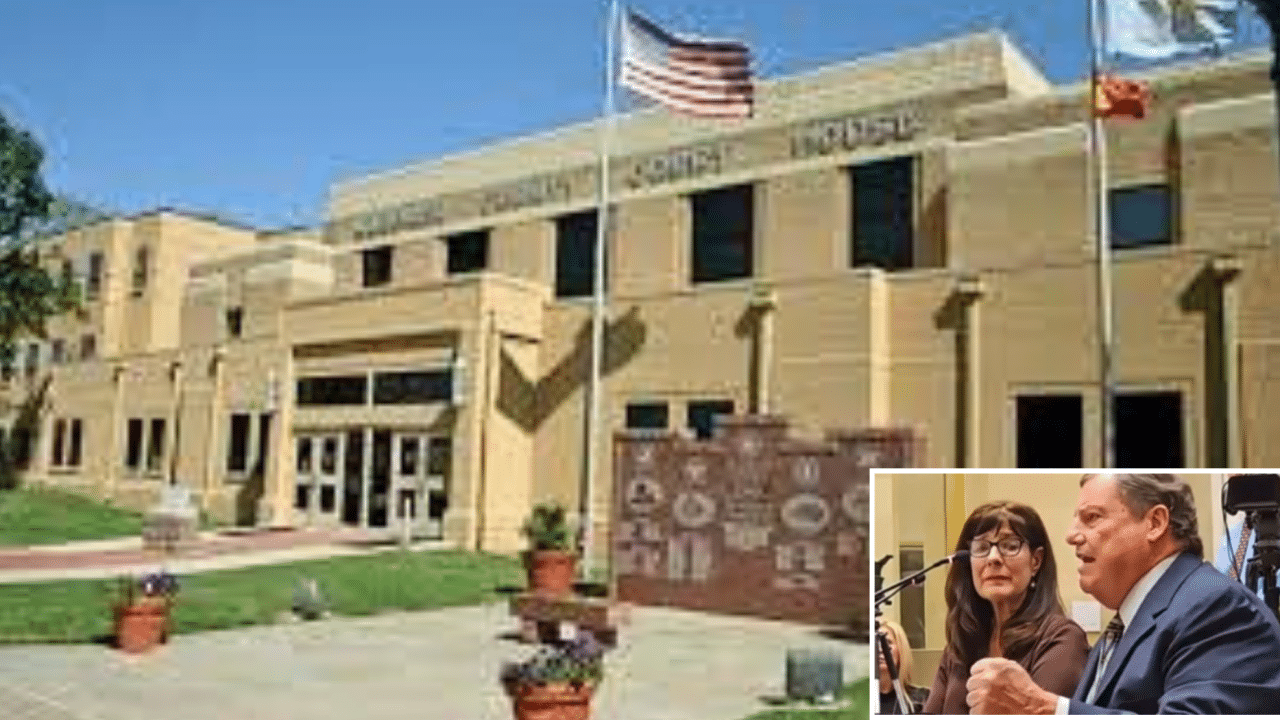
By John Dobberstein, Editor
Because of a flurry of lawsuits in local and federal courts, little has been said by the Republican candidates for Wagoner County Sheriff about the case surrounding Elijah Woolley, a Broken Arrow toddler who was found dead at his grandparents’ house 5 years ago.
Bill and Lisa Woolley were charged with murder by Wagoner County District Attorney Jack Thorp after a coroner with the Oklahoma State Medical Examiner’s Office ruled Elijah’s death a homicide. But after renowned pathologists raised serious questions about Elijah’s autopsy, the charges against his grandparents were dropped.
During a recent debate between Wagoner County Sheriff Chris Elliott – who was sheriff when the case emerged – and his challenger, Tyler Cooper, Cooper was asked if he has been given a chance to review the accusations against the grandparents. Cooper and Sheriff square off in a runoff election Aug. 27.
Critics of Cooper have accused him of hooking his campaign to the Woolley family and their lengthy push to regain custody of Elijah’s brother, Clayton Woolley, who is still in custody of a guardian who isn’t a family member.
Bill and Lisa Woolley’s son, Gabe Woolley, is a candidate for House District 98 race that includes Wagoner County. He faces a runoff against incumbent Rep. Dean Davis.
Cooper said he’s reviewed the case and he does have some concerns.
“If a guilty family has handed over evidence of a crime willingly, and we can’t put them in prison, we need to (review) our investigations,” Cooper said. “If it’s an innocent family and we take away their rights, we ruin their retirement, we ruin their family, we ruin their jobs, we ruin everything about their life — and they’re in our community.
“So either we have a guilty person that should be in prison, or we have an innocent person where we’ve destroyed their lives.”
Elliott has remained silent publicly about the case, most likely due to long-standing lawsuits against Wagoner County officials that still haven’t been resolved.
When the Woolleys were arrested, Elliott said the department conducted a thorough investigation. “We went in with open minds and eyes wide open, and in trying to determine how we lost one innocent child, we learned we needed to protect another.”
At the forum, Elliott said there’s still a lot he can’t talk about, but he did offer his perspective on what officers encountered when called to the scene on March 30, 2018.
“We found a 14-month-old baby out there deceased. We didn’t know what happened to it. The report came back from the medical examiner’s office and it said that baby was a victim of a homicide. That the baby had been sexually assaulted with multiple blunt force trauma,” Elliott said.
“What am I supposed to do with that? I investigated it, my detectives investigated it, and it passed muster with three District Court judges.
“That’s the way our criminal justice system works. They got bound over for trial. It went into the judiciary process and there was no prosecution. So I’m not going argue with a good pathologist, an experienced pathologist and go, ‘Well that is just too unconscionable. How could two grandparents do that to their child?’”
‘They know what they’re doing’
The medical examiner’s office in Tulsa was, at the time of Elijah’s autopsy, unaccredited and had been so since 2009 due to inadequate facilities and staff. The State Medical Examiner’s Office said earlier this year it is still working to get its accreditation returned from the National Assn. of Medical Examiners.
Elliott was asked what he planned to do to stop “this highly unreliable source” – meaning the medical examiner’s office in Tulsa — from being used in criminal cases.
He responded that when a fatality occurs in the State Medical Examiner’s Office has jurisdiction to perform autopsies, conduct examinations and make a ruling on the cause of death.
Elliott said he has “no idea” what accreditation means for a medical examiner’s office – whether it’s over facilities or working conditions or other issues.
“I have no idea what they’re talking about. But I know the medical examiners that I deal with down there. I dealt with them in the 1980s when I was a Tulsa policeman,” Elliott said. “They’ve been there forever. They’re very knowledgeable. They know what they’re doing. I have no reason not to believe what they’re telling me when we get a death report.
“So what are we going to do? I’m going to depend on the state medical examiner to come out and respond to our fatalities when it’s an unattended death, as the state statute says they’re supposed to.”
Bill and Lisa Wooley were in the audience for the July 30 debate and took issue with some of Elliott’s statements, noting that several expert pathologists from outside the county questioned the Tulsa medical examiner’s conclusions, which ultimately led to the dismissal of charges.
They also said the lack of accreditation at the Tulsa medical examiner’s office was never disclosed by prosecutors until it came up during the Woolleys’ criminal trial.
“The sheriff put our family and our safety and our lives in jeopardy when he got on the air and told the world that he knew we killed that baby,” Lisa Woolley told the Sentinel. “Ask him if he really believes that people should be treated as innocent if they have not been able to be proven guilty.”



Bailey says
Sadly, this article was not properly cited. How do you know the child is not with family? Have you spoken with the child? Have you spoken with the guardian? Also, the Woolley’s “renowned” pathologist has been discredited, unlike the pathologist for the state. Further, Mr. Cooper told the audience during the debate that he had not seen the evidence but rather watched the “documentary” produced by the defendants or produced by someone who is supporting them. In fact, Mr.Cooper’s response to the question at the debate regarding the Woolleys was concerning and frankly flippant. How can a law enforcement officer make a decision as to an opinion on a case without actually reviewing the evidence? Isn’t this the same complaint made by the Woolleys as to Investigator Elliott? That he made a decision without talking to them or reviewing all the evidence?