By John Dobberstein, Editor
While Broken Arrow has grown by leaps and bounds since the 1960s, the city is still dominated by vehicular traffic. The city’s 64 square miles has a shortage of trails, sidewalks and other amenities for bicyclists, pedestrians and those with physical challenges.
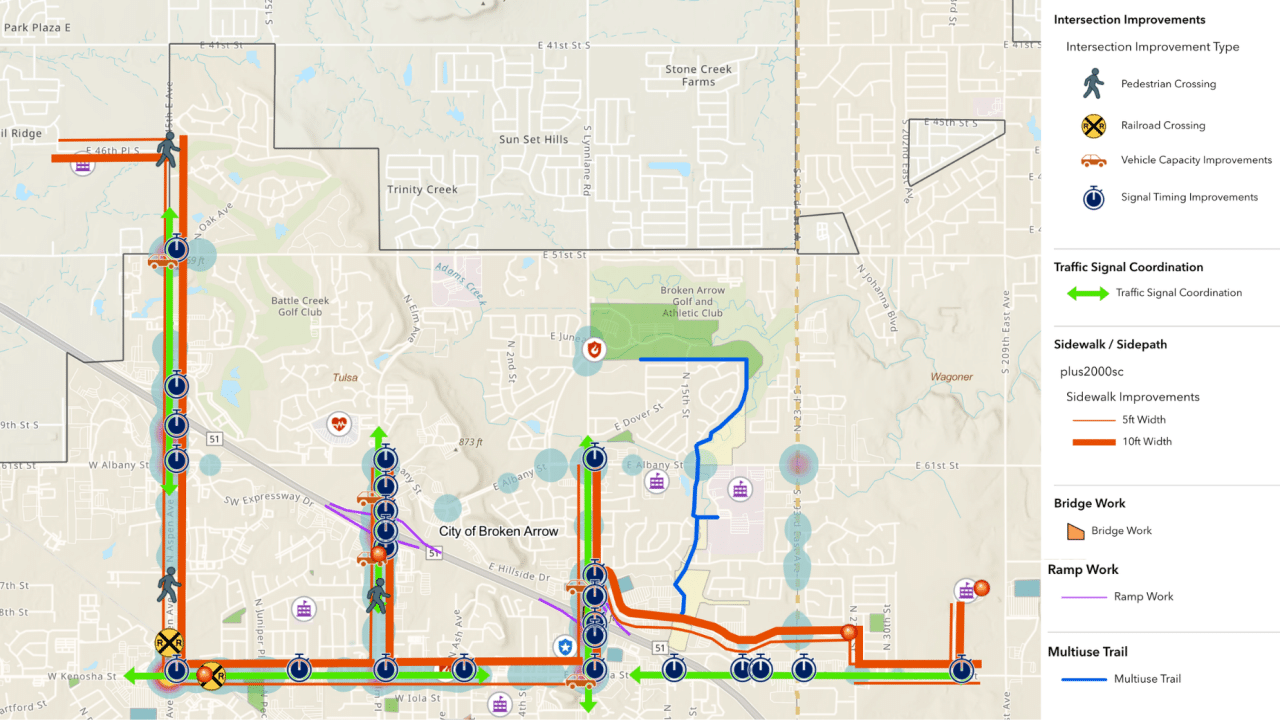
City leaders are trying to change that through the “Reconnecting Broken Arrow Project,” with the aim toward improving safety and connectivity for cars, bicycles and pedestrians along several key corridors.
——————————
TO LEARN MORE AND LEAVE YOUR COMMENTS, CLICK HERE.
——————————
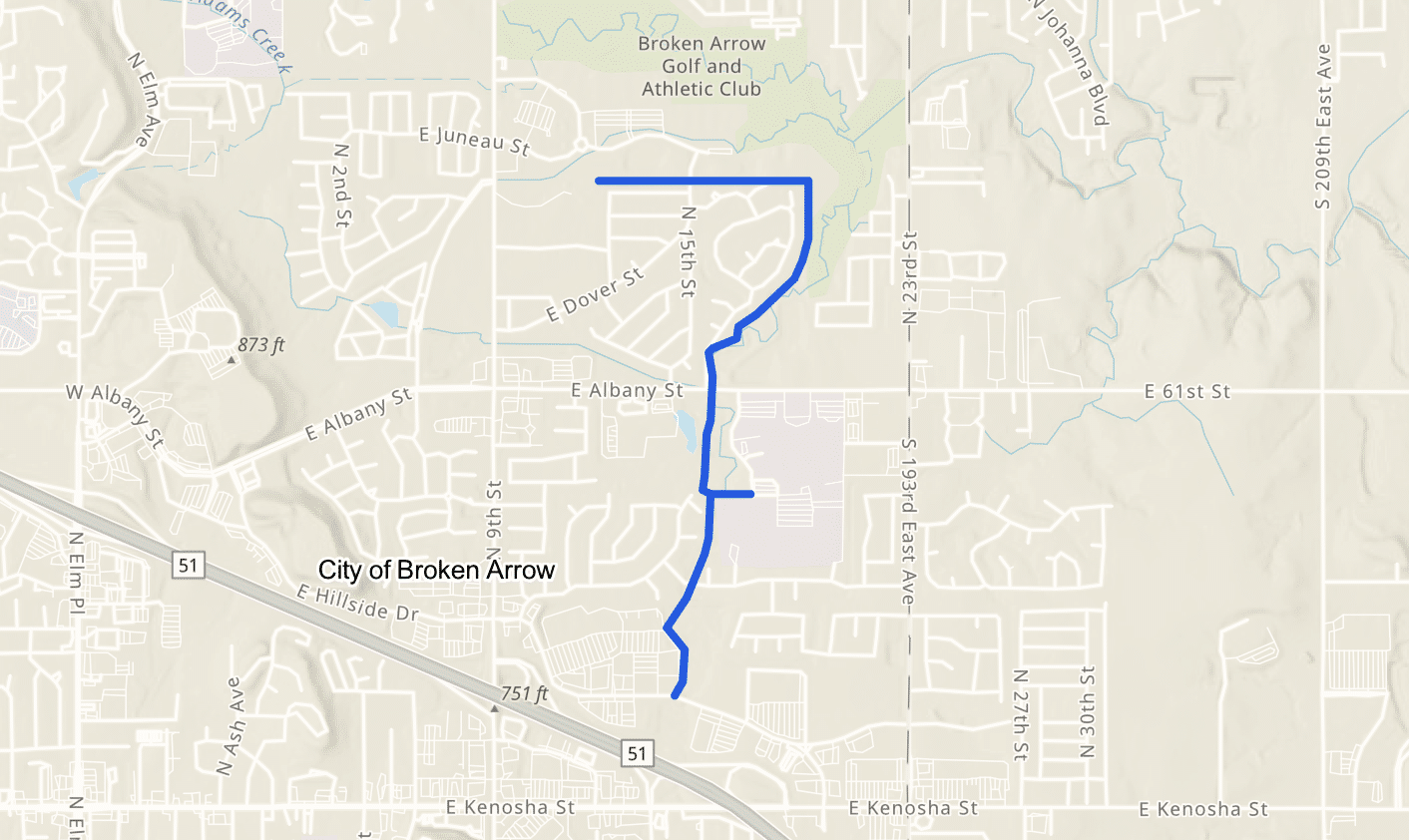
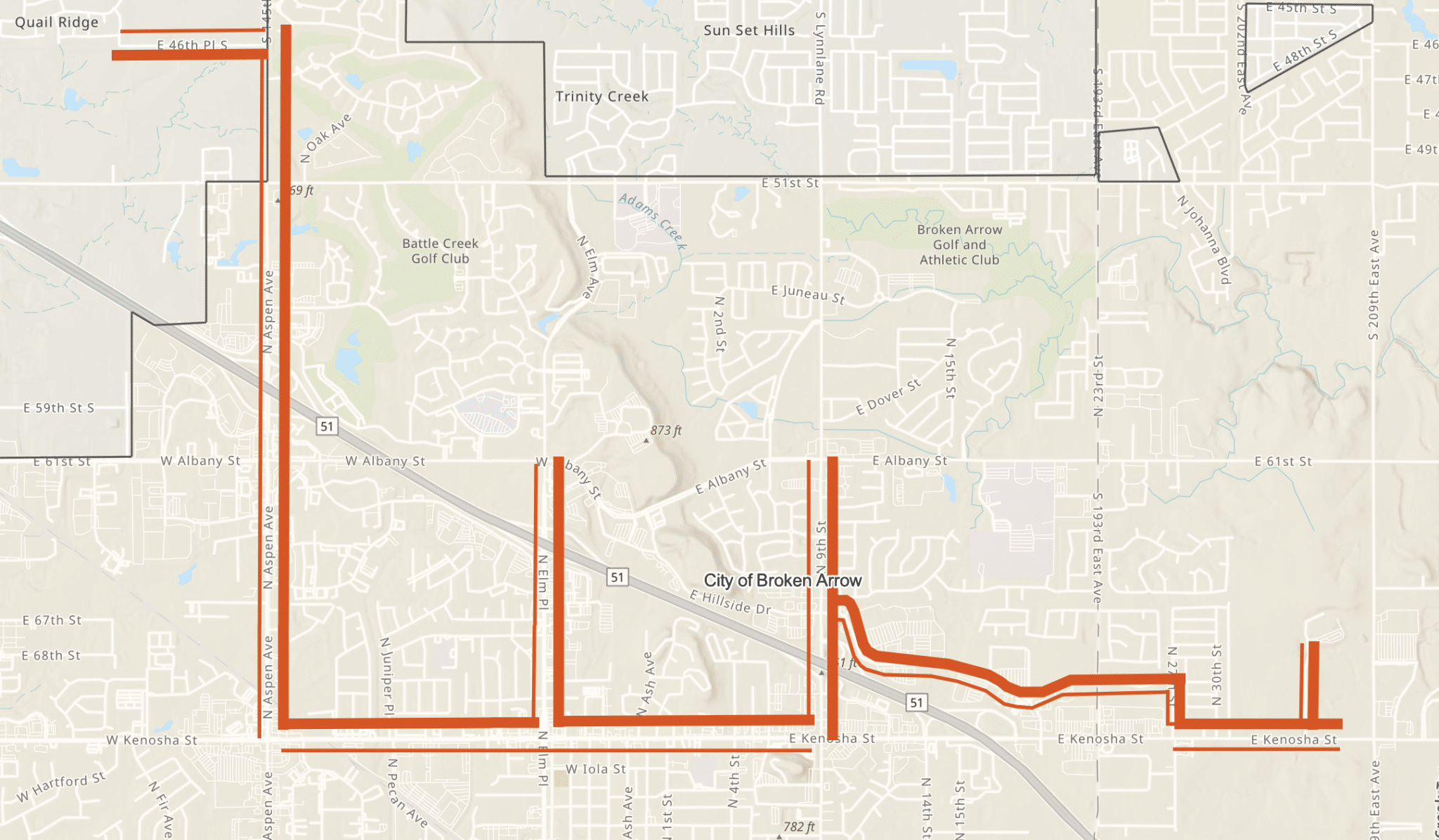
In general, the project proposes adding turning lanes at intersections, sidewalks and side paths next to roadways, and a new bicycle and pedestrian trail. Major improvements are also being contemplated for the Highway 51 interchanges with Elm Place and Lynn Lane Road, which is part of a separate project.


The city received a $6 million federal grant and is combining it with $1.5 million in GO Bond 2018 funding to study the capacity and safety issues in an area bounded by Omaha Street south to Kenosha Street, and N. 23rd Street west to Aspen Avenue, and to design solutions.
Garver, an engineering, planning, and environmental services firm based in Little Rock, Ark., and a special advisory committee reviewed arterial streets, sidewalks, trails, intersections, lighting and other amenities and identified some preliminary options to improve mobility.
And through May 7, the city is asking residents to provide input, which they can do by going to the Reconnecting Broken Arrow website.
Once the public comment period is over, the City Council will eventually review and approve any improvements, and Broken Arrow leaders will start searching for funding to complete the projects while design and federal approvals are completed.
The Oklahoma Department of Transportation is conducting a traffic study of the Highway 51 corridor and that will mean some design changes to the interchanges at Lynn Lane and Elm Place.
At Lynn Lane the project could potentially include additional lanes on the bridge and a new ramp from southbound Lynn Lane to the westbound lanes, rather than the current left-hand turn across traffic. The interchange projects are not included with the grant.
“This is the first step because the improvements we need to make are expensive, especially when you’re talking about eventually needing to reconfigure the interchange at Lynn Lane,” said Broken Arrow City Manager Michael Spurgeon. “I think no one would argue if I was to say that is one of the top priorities within our community.”
While Spurgeon said he’s grateful that more than $200 million was approved by voters in the recent GO Bond election, “obviously, getting on and off Highway 51 and making sure that we have good trails, sidewalks and transportation alternatives is extremely important.”
Facing Challenges
Traffic flow is a major emphasis of the studies completed so far, said Kirsten McCullough, planning and environmental practice leader for Garver.
It’s not only challenging for vehicles entering and exiting the highway, but for pedestrians and bicyclists to get across the highway. “It’s definitely a barrier,” McCullough said.
Garver’s studies of infrastructure found sidewalk coverage along the arterial roads in north Broken Arrow is inconsistent. While the Lynn Lane corridor has nearly 100% sidewalk coverage, Aspen Avenue has about 56% coverage, Elm is at 80%, Hillside Drive is 74%, and Kenosha is 74%, said Justin Seabaugh, project manager for Garver.
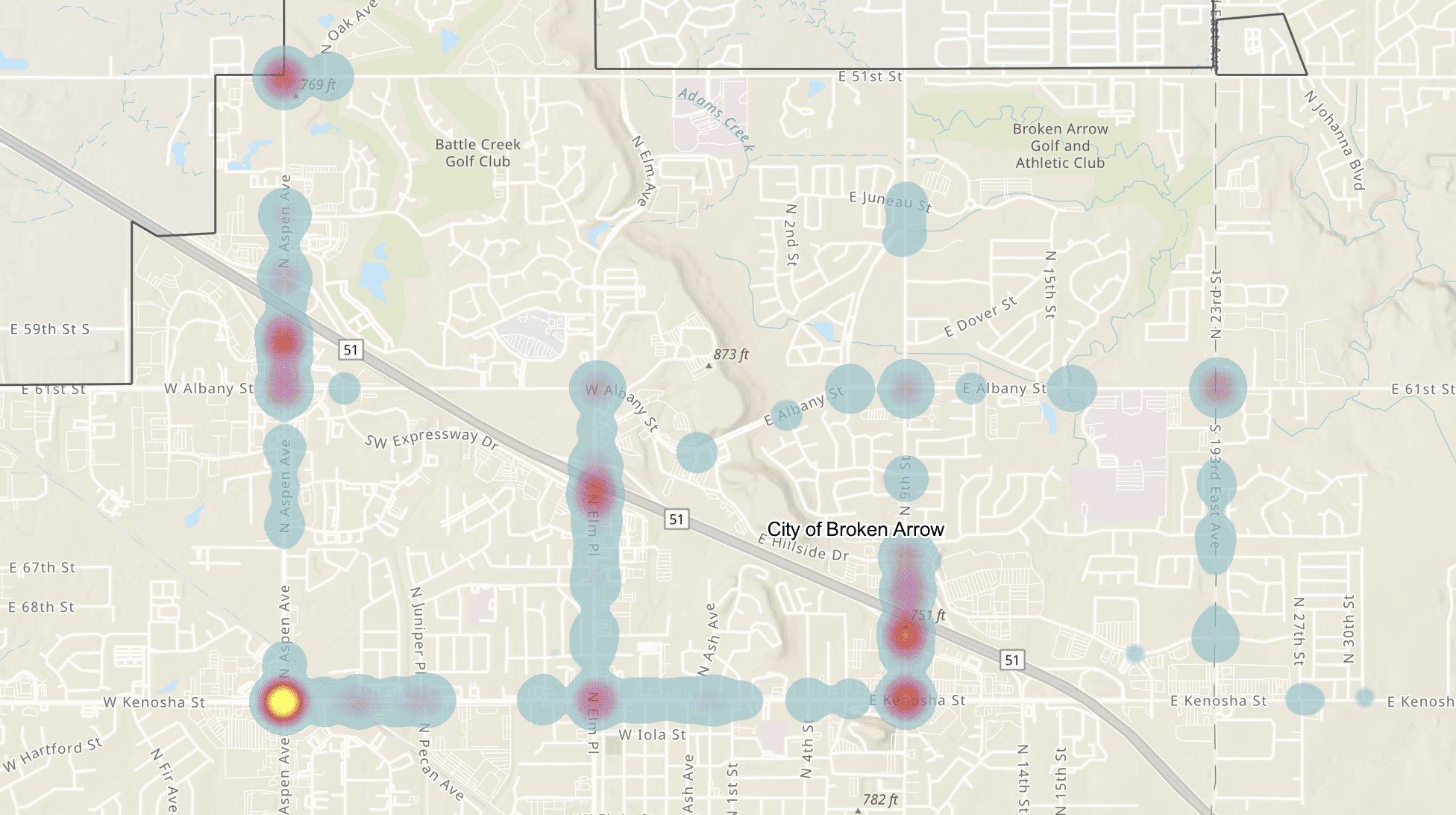
Traffic safety is another major issue the city and Garver are addressing. A heat map of accident data from 2017-21 show the intersection of Aspen and Kenosha suffered the most crashes, while the Elm and Lynn Lane corridors aren’t far behind.
Seabaugh said 46% of all crashes studied resulted in injury, and there were 4 fatal accidents.
Lighting could also be an issue, he said, as about half of the crashes in those 5 years happened in the non-daylight hours — 4 of them involving pedestrians. Street lighting is a problem north of Highway 51 in the city.
In the corridors studied, almost all the traffic signals have at least one movement that backs up because it doesn’t have enough green time to allow vehicles to get through, Seabaugh noted, leading to longer wait times.
He said the intersection of Aspen and Omaha is one of the most “over-capacity signals” in the study area.
The crash rate along Aspen Avenue and Kenosha Street is nearly double the statewide average for roads of that type, and along 9th Street the crash rate is more than 2.5 times the state average, Garver said.
For sidewalks the company is recommending a minimum 10-foot side path on one side of the road and 5-foot side path on the other side, with the wider paths allowing for multi-modal use.
Improving lighting at crosswalks and pedestrian crossings is also recommended, as it can reduce pedestrian accidents up to 42%, according to federal data.
Garver is also recommending all the traffic signals be adjusted to improve timing, along with enhanced safety for pedestrian crossing. Other improvements could include enhancing signals to meet ADA standards.
Access management out of driveways may also be considered to reduce the amount of points where vehicles are making turning movements onto major streets and reduce vehicular conflicts with pedestrians. Adding medians along the corridors is also being contemplated.



Leave a Reply