
By John Dobberstein, Editor
Despite impassioned pleas from Tulsa-area Muslims for a new house of worship, the Broken Arrow City Council turned down a proposal for a mosque and retail center, setting up what could become a legal fight over the development.
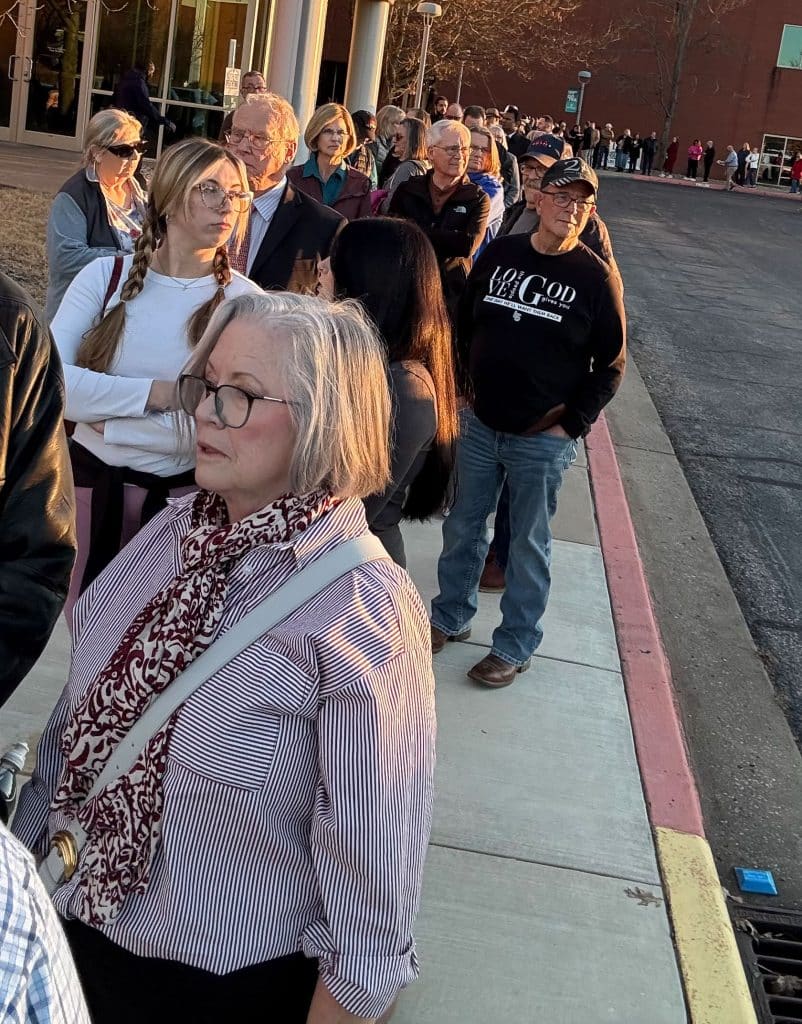
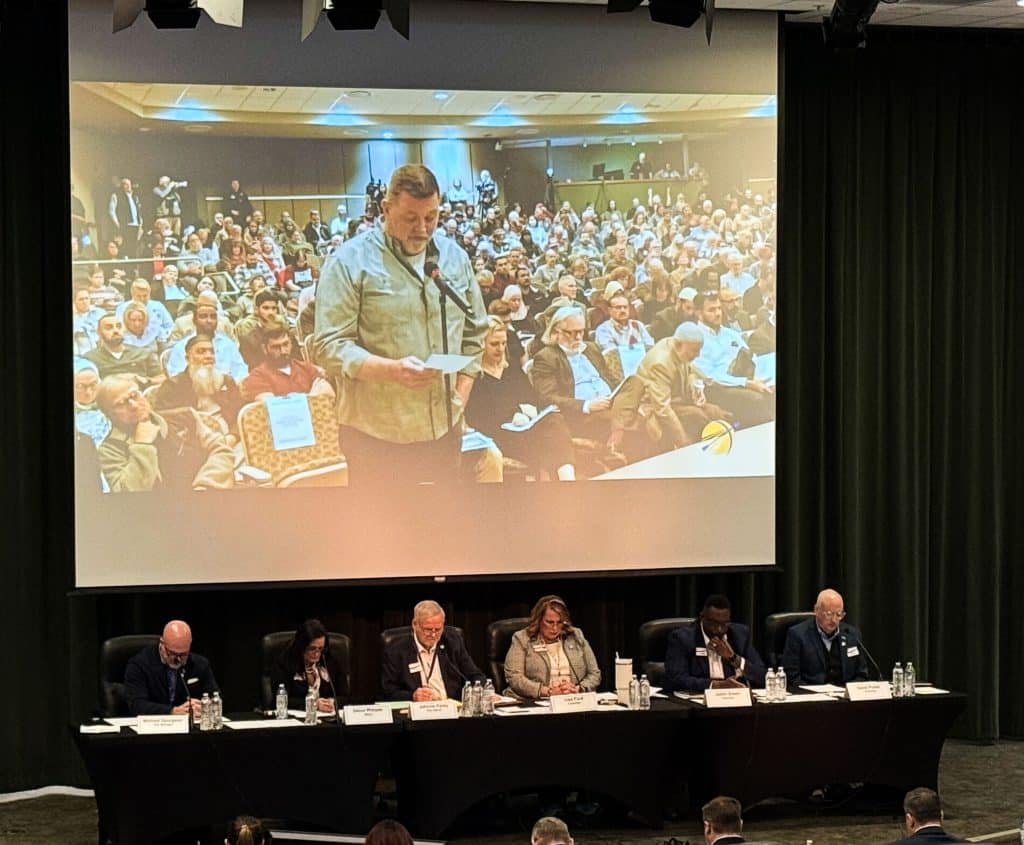
More than 1,000 people packed the administrative offices at Northeastern State University-Broken Arrow, filling the 350-seat auditorium and an upstairs ballroom. Well before the doors opened there were more than 100 people waiting in line to get seats.
After listening to nearly 4 hours of debate both for and against the proposed mosque and retail center, city councilors closed the floor for public comment, briefly listened to a rebuttal from the developer — the Islamic Society of Tulsa (IST) — and voted 4-1 to deny the rezoning application and conditional use permit for a place of assembly.






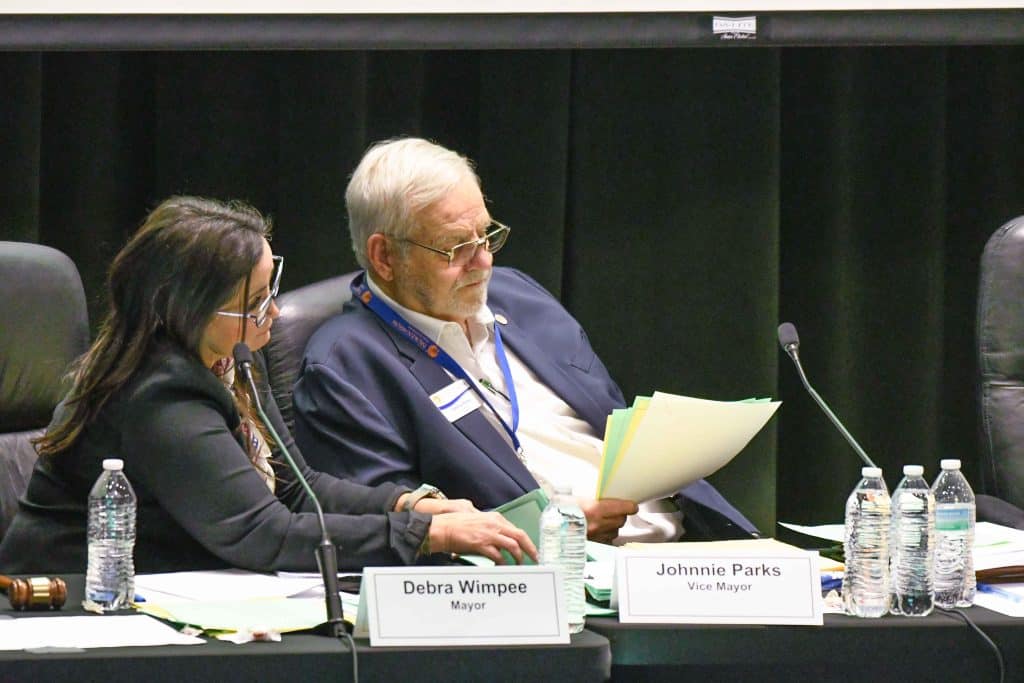


Ward 2 Councilman Justin Green floated a motion to deny the requests — stating the reasoning was due to site use, not for religious reasons — and it was seconded by 4th Ward Councilwoman Lisa Ford.
Green, Ford, 1st Ward Councilwoman and Mayor Debra Wimpee and 3rd Ward Councilman David Pickel voted “yes” on the denial, and At-Large City Councilman and Vice Mayor Johnnie Parks voted “no.”
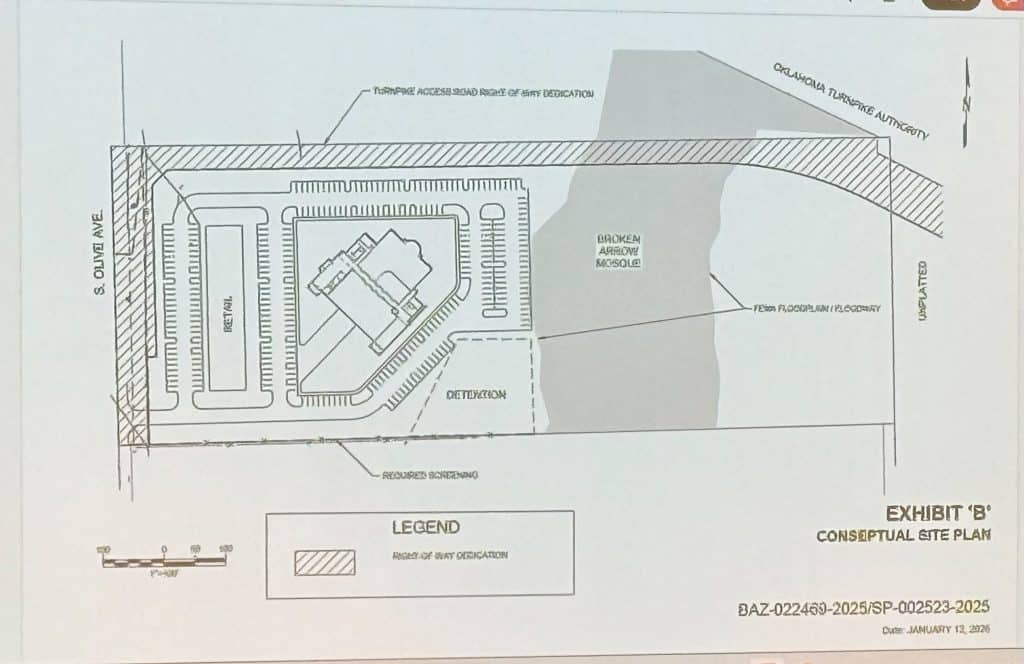
The denial came in spite of city staff and the Broken Arrow Planning Commission recommending approval of the rezoning and permit for the mosque and retail center, which was to be built on 15 acres along Olive Avenue, just south of the Creek Turnpike.
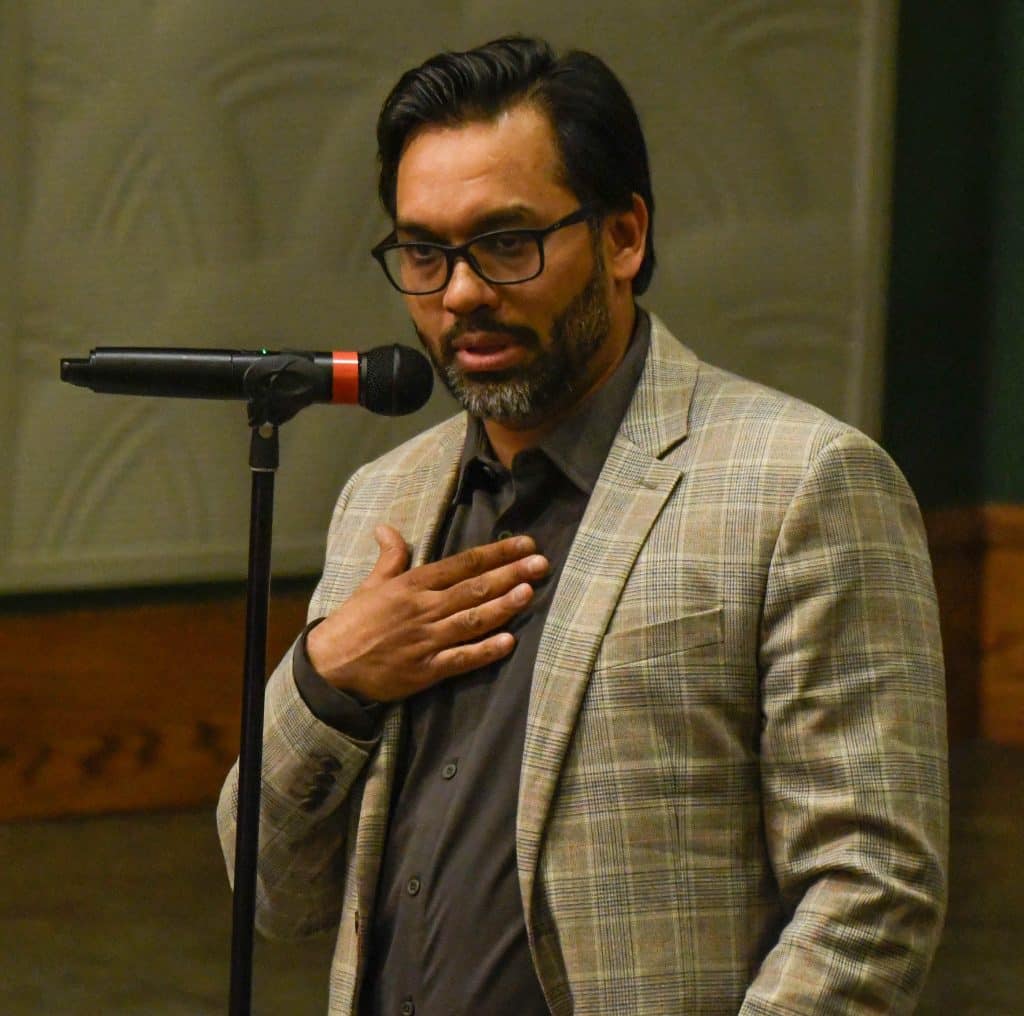
Aslam Syed, an elected member of IST who has been the mosque’s spokesperson for the project during public hearings, said the City Council’s decision did not surprise him and a lawsuit over the denial is likely.
“I expected this would happen because there was a lot of public pressure on the councilors,” Syed said. “I was hoping and praying for something different. This will definitely be headed to court because there was no merit in any of their decision making today.”
Veronica Laizure-Henry, executive director of the Council on American-Islamic Relations in Oklahoma, said the outcome was disappointing but she didn’t feel the project is completely sunk.
“My feeling is if they’re given a chance to cure the deficiencies in their proposal, just as any other entity or house of worship would be given that opportunity, they could come back before the City Council again and ask for the permit to be approved with an improved proposal,” Laizure-Henry said.
“If the city of Broken Arrow goes on a course that includes discrimination against its Muslim residents we will advocate for them and that includes legal action if necessary,” she added.
“I sincerely hope they will be guided by questions and conversations about facts as we heard — the traffic and rainwater and sewage — and not about Islamophobic discourse that has unfortunately dominated a lot of the conversation.”
“I understand folks who have had very little contact with Muslims having these concerns. It’s not a bad thing to have been misinformed or to have lacked education,” she added. “Folks who are dealing with that kind of fear and concern should reach out to resources in the community, who are here to educate and teach and to answer some of these stereotypes.”
Numerous speakers, however, urged the City Council to reject IST’s requests — either due to concern about Muslim cultural aspects being incompatible, or potential infrastructure problems with the site itself, including traffic, nearby floodplain and environmental concerns, lack of city utilities and potential drainage problems along Olive.
The city said a service road was being proposed from Olive to Aspen to facilitate economic development along the turnpike and the mosque development would have caused complications — although IST said they would donate the right of way for it.
“I have the same concerns I did coming into this meeting. I think the comprehensive plan is very clear on what we want in that area. And the traffic situation clearly is not going to get any better,” Ford said.
“We are not here to discuss freedom of religion. We’re not here to discuss which religion is right, which religion is wrong,” Green said. “We’re here to look at this case on the merits and the facts that have been presented to us. And my vote is not based on racism or any of these other Islamophobic terms.
“It wasn’t very long to go that a person who looked like me would not be able to sit in a seat like this. So the things being discussed here are practical, logical and reasonable. I personally don’t feel that this project is acceptable for this current land use.”
Wimpee said early Tuesday her decision, “was not about religion, hate or disagreement with anyone’s beliefs or way of life. I know and respect many good people on all sides who call Broken Arrow home.
“As a city Councilor, my responsibility in development cases is to evaluate the proposal itself. This was a rezoning request, and the questions are always the same: Does it meet city requirements? Is the infrastructure adequate? Does it align with our comprehensive plan and ordinances?
“In this case, it did not. Because of that, the only responsible vote was no. That decision would have been the same regardless of who brought the proposal forward or what type of project was proposed for that property.”


Kathy Lynn Hunley says
Why couldn’t this Broken Arrow – use and get The land under the Indian law
Shawn Hendershot says
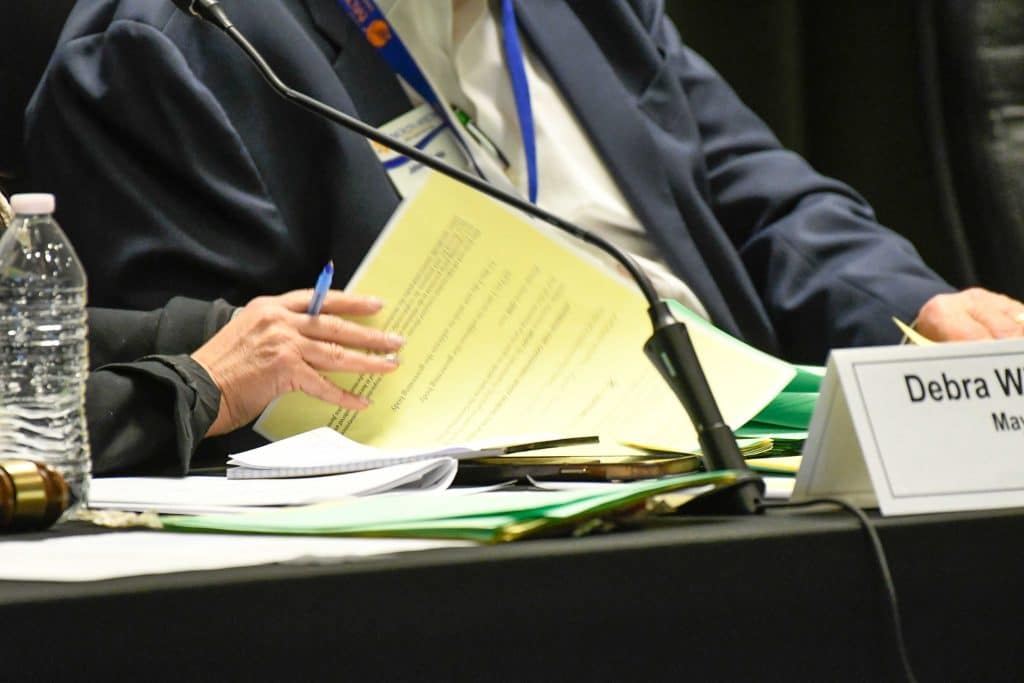
I hope the IST sues and wins. The mob mentality around the mosque proposal (plus the subtle trickery by the City requiring the support slips be on yellow paper and oppose slips on green paper) is such that the city should be compelled to allow it.
Gary Miller says
Seems to me only one side of the discussion of the project was presented in this report.
I believe both sides should have received equal coverage for readers to consider.
John Dobberstein says
Gary, this report has been updated with additional comments we could not get in at deadline late last night. Thank you for reaching out.
Osage says
You need to look into the one council person voting in favor of the mosque