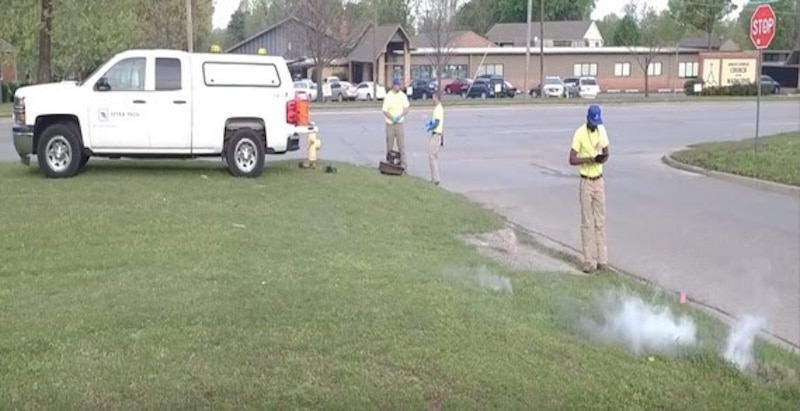
Source: City of Broken Arrow
The City of Broken Arrow, with the assistance of outside contractor Tetra Tech, will be conducting smoke testing for the Lynn Lane Wastewater Treatment Plant sub-basins in north Broken Arrow in the coming weeks.
The testing will be located mostly around County Line Road (23rd Street) between Kenosha and Albany Streets, Director of Engineering and Construction Charlie Bright said. It’s around the Broken Arrow High School and eastward on the other side of County Line Road.
Residents living in the area of the testing should not be alarmed if they notice smoke rising from the ground on their property while the tests are underway. Smoke testing is a relatively simple process that consists of blowing smoke mixed with larger volumes of air into the sanitary sewer line through manholes and sewer pipes.
“We’ll make notes [of where smoke is seen] and track it so we can make future improvements,” Bright said.
The testing will continue for several weeks during the daytime hours between 8 a.m. to 4 p.m. Smoke testing is part of the City’s Infiltration and Inflow reduction field investigations.
Data from the tests will be used to prepare a Defects Summary Report and Rehabilitations Recommendation for the future improvements to the wastewater collection system that flows into the Lynn Lane Wastewater Treatment Plant.
The Engineering and Construction Department, along with Tetra Tech, will alert residents when they will be in their neighborhoods conducting tests. They will also notify the Broken Arrow Fire Department of the locations where the testing will occur each day.
This testing enables the City to identify maintenance issues that require attention to ensure the system operates properly. It helps identify problems such as broken manholes, roof drains, yard drains, uncapped lines, and cracked mains.
The smoke draws attention to passageways that are permitting the smoke to reach the surface. By sealing off the crevices where water flows into the system uninvited, it reduces the amount of water entering the sanitary sewer system and lowers the cost of treating that excess water.
“Maintaining a sanitary sewer system is challenging, and over time, it begins to age,” Bright said. “As that occurs, you have more and more ways rainwater and other water can get into the system.”
The City last conducted smoke testing in 2023.
“It turned into an important project, and we significantly reduced the amount of flow that was going through the basins and into the lift stations,” Bright said.




Leave a Reply