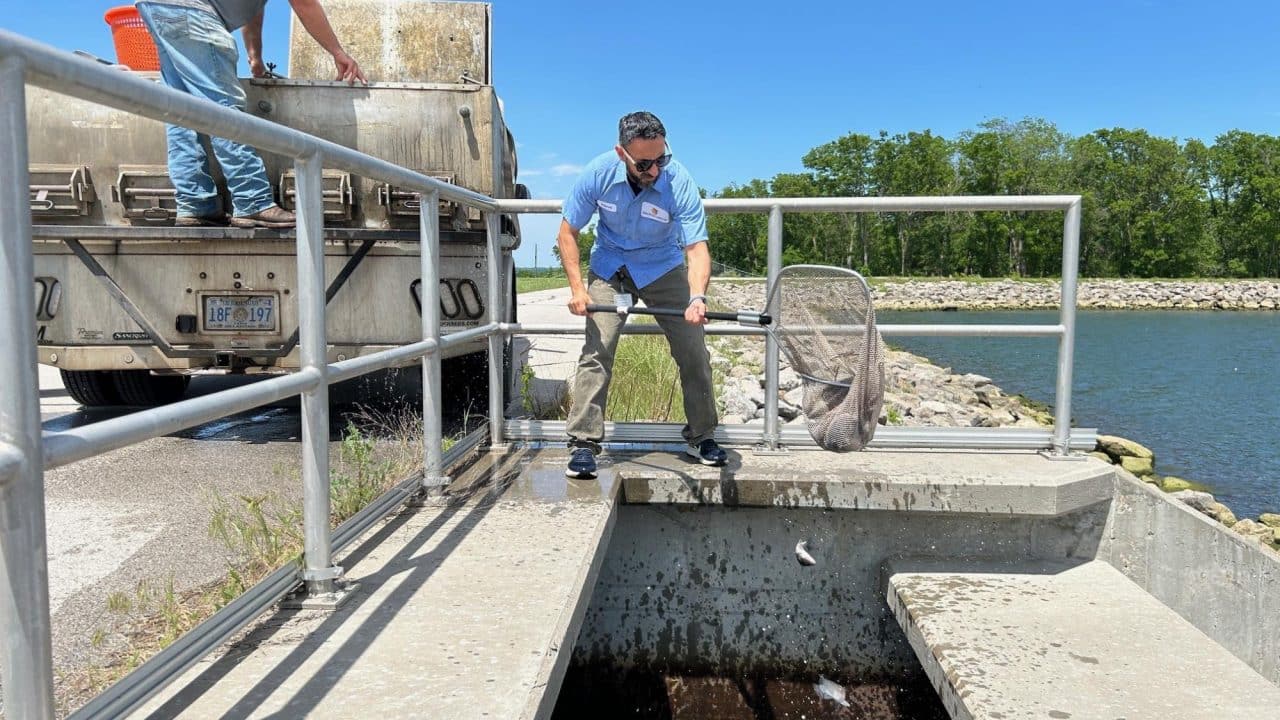
Source: City of Broken Arrow
It’s fishing season at the Verdigris River Water Treatment plant, but not in the way you may think.
As Bruce the Shark famously said in Disney’s Finding Nemo, these “Fish are friends, not food.” Bluegill and Tilapia fish are used at the water plant to help with the filtration process.
The City of Broken Arrow Utilities Department strives to provide residents with high-quality, safe drinking water that surpasses the U.S. Environmental Protection Agency and Oklahoma Department of Environmental Quality requirements.
“Providing the citizens with more environmentally friendly water treatment while minimizing chemical use is the goal,” said Verdigris River Water Treatment Plant Manager Lou Ann Fisher. “We continue to look for sources and ways to treat the water that reflect our concern for the good health of our community.”
One of the ways the city’s highly trained and licensed operators accomplish that goal is by regularly stocking the pre-sedimentation water basins with Bluegill and Tilapia fish.
Operators added more than 600 pounds of Tilapia and 6,100 headcount of Bluegill to the basins on May 1. Each type of fish has a unique purpose in the water filtration process.
Warmer temperatures cause algae growth in surface water sources, such as the Verdigris River, which is the City’s primary source for drinking water. Algae blooms can affect the taste and smell of the drinking water.
“We’re combating the algae in many different ways,” Water Plant Operator Jed Beloncik said during the fish stocking process.
Beloncik tests the water from the river and both basins for taste and odor compounds. The samples are sent to a Texas laboratory for evaluation.
Algae is Tilapia’s primary food source, and with this method, nature minimizes algae growth.
Broken Arrow has used Tilapia since 2014 as a secondary control for combating algae. However, with their recent success, Tilapia has become a primary source, and the operator’s re-stock the basins every year.
“Another situation of concern is water fleas (ceredaphnia dubia), microscopic translucent fleas that can make it past treatment processes and clog the strainers for the water plant’s microfiltration process,” Fisher said.
Bluegills feed primarily on water fleas and help control their population and minimize their harmful impact. They are an Oklahoma Native fish and are re-stocked every other year.
Fisher credits Senior Plant Operator Sam Burman, who made the Bluegill discovery a couple of years ago while researching how to get rid of water fleas.
“It was a game changer in the warmer months,” Fisher said.
In case you’re wondering, the pre-sedimentation water basins are not open for public fishing, because after all, these fish are friends, not food!




Leave a Reply