
By John Dobberstein, Editor
The U.S. Department of Justice has informed the city of Broken Arrow the federal agency plans to investigate the city’s zoning and land-use practices after the City Council voted to deny a rezoning request for a mosque.
In a letter to Mayor Debra Wimpee and City Attorney Trevor Dennis, the DOJ said it probe the city’s practices in connection with the Religious Land Use and Institutionalized Persons Act of 2000 (RLUIPA).
The act prohibits application of a land use regulation that imposes a substantial burden on religious exercise absent a compelling justification pursued in the least restrictive means.
In a statement Tuesday, the city said Council members and city administration are “fully engaged with the DOJ in its investigation,” but would not comment further. The City Council plans to hold an executive session on Aug. 3 at 5:30 p.m. to discuss the probe privately.
The Council on American-Islamic Relations acknowledged the probe Tuesday and said it welcomed the inquiry, “as recognition that religious freedom protections apply equally to all faith communities.
“Local governments cannot be allowed to deny equal treatment based on prejudice or political pressure. We hope that the investigation will help ensure Muslims in Oklahoma enjoy the same constitutional and statutory protections afforded to every other religious community.”
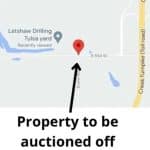
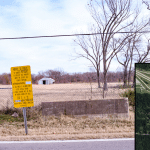
The Islamic Society of Tulsa proposed a mosque and commercial center on Olive Avenue, a half-mile north of Tucson Street, in south Broken Arrow but the City Council voted 4-1 to deny a rezoning request by ISOT, citing infrastructure concerns about inadequate parking, drainage, traffic flow and a proposed service road along the Creek Turnpike that would run through a portion of the property.
Earlier this year, the Broken Arrow Planning Commission voted 3-2 to recommend approval of ISOT’s rezoning request during a lengthy public hearing. City staff had also recommended approval.
Thousands showed up at the City Council’s hearing over the zoning request and many of those attending expressed concerns about Islamism, as well as the vacant land in question and whether the project was a good fit. City Council members vehemently denied their decision had anything to do with religion.
The act does not allow a municipality to treat a religious assembly or institution on less than equal terms with non-religious assemblies or institutions. It also disallows discrimination against religious entities based on religion or religious denomination. Land use that totally excludes or unreasonably limits religious assemblies, institutions or structures within a jurisdiction are also prohibited.
“Our investigation will focus on how the city’s zoning laws treat religious land uses,” the DOJ’s letter states. “As part of our investigation, we will review the city’s zoning requirements for houses of worship, as well as the city’s denial of a rezoning request by the Islamic Society of Tulsa.”
The DOJ said the investigation is preliminary and no determination has been made if the act has been violated by the city.
“We believe that the public interest and the interests of the city will be best served by our having complete and accurate information about the city’s zoning and land use practices,” the DOJ said.
The agency requested certain documents and information from the city to be produced in 30 days, and the DOJ may also interview city employees, agents or officials in the near future as part of the probe.
The 15 acres of land where the mosque was to be located is owned by the North American Islamic Trust (NAIT), a national organization which holds deeds to hundreds of mosques across the U.S. After the City Council made its decision, ISOT said a lawsuit against the city was “likely,” although no action has been taken.
Oklahoma Attorney General Gentner Drummond also announced, 4 days before the City Council hearing, that he would investigate the mosque proposal. It’s unclear if the investigation was completed or led to any determination.

Leave a Reply